Oil and Aromatherapy Massage in Thailand: What to Expect
The relaxation default for most travellers in Thailand. How oil massage differs from Thai work, what blends mean, what it costs, and how to pick a shop that takes the craft seriously.

Oil massage versus Thai massage
If traditional Thai massage is the strict grandmother of the family, oil massage is the easygoing cousin. It happens on a padded table, not a futon. You undress to a towel or disposable underwear. The therapist warms a botanical oil between her hands and works the body in long, gliding strokes, layering deeper effleurage and kneading where the muscles ask for it. The goal is parasympathetic shutdown, not mobility. Most people fall asleep at least once.
Aromatherapy massage is the same technique with a chosen essential-oil blend driving the mood: lavender and chamomile to sedate, lemongrass and ginger to energise, eucalyptus and peppermint to clear the head. The oil is the headline; the strokes are largely standard.
What happens in a session
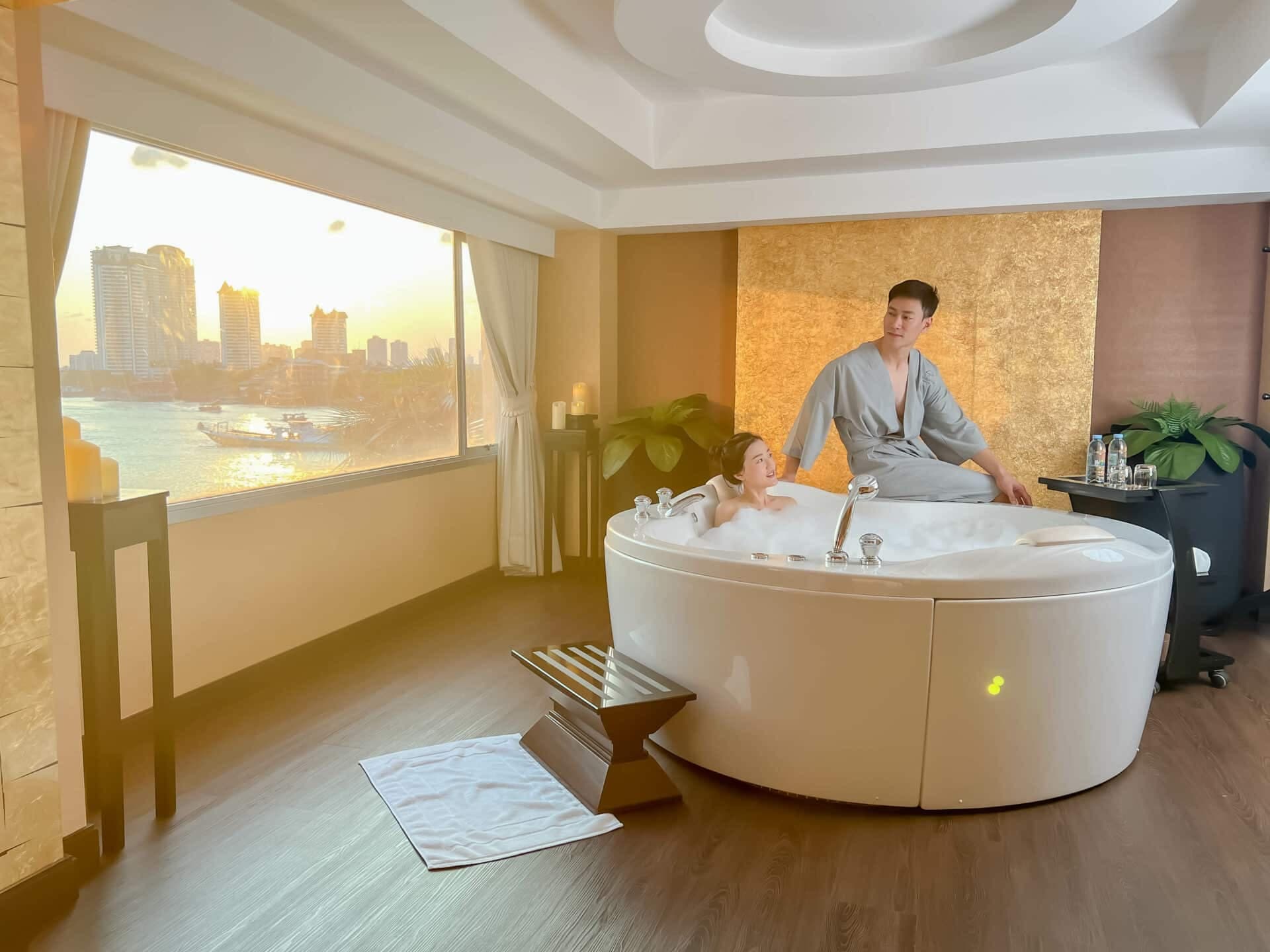
A short intake covers pressure preference, allergies, and problem areas. You pick a blend from a small set of bottles. The shop provides a private room or curtained bay with a shower in the better venues. You undress under a sheet. The session usually starts at the back, moves to the legs, returns to the back, then arms, scalp and face. Sixty minutes is the floor; ninety is where the work has time to actually settle. A warm shower at the end is standard at mid-tier spas and above.
What it costs in Bangkok and the islands
Bangkok shophouse rates run 400 to 700 baht for a sixty-minute oil session, which is about 100 to 200 more than dry Thai work in the same venue. Neighbourhood spas with private rooms charge 900 to 1,500. Hotel spas sit at 2,200 to 4,000 depending on the property. On the islands the floor moves up by 100 to 300 baht and the ceiling by considerably more, especially in Phuket beach resorts.
How to spot a serious oil shop
A good oil massage venue has private rooms with doors, not curtains. Towels are clean, oils are in labelled glass bottles rather than nameless plastic squeeze tubes, and the room smells like the oil rather than the previous client. The menu lists each blend's intended effect. Therapists ask about pressure during the session, not just at the start.
The opposite signal: anyone offering a 250-baht oil massage in a glass-fronted shop on lower Sukhumvit is not selling the same product. Therapeutic oil work needs clean linens, private space, and a therapist who has been trained on more than the gliding stroke. The price floor is real for a reason.
Etiquette and aftercare
Most therapists wait outside while you undress. Underwear is optional and your call; disposables are usually offered. Speak up about pressure early in the session, not after the back is finished. Tip 100 to 150 baht in cash for sixty to ninety minutes of good work, more at higher-tier spas where ten percent is the convention.
Skip the shower for at least an hour after if you can stand it; the oils continue to absorb. Drink water. Plan something low-stakes for the next two hours. A good aromatherapy session leaves you slightly stupid in a useful way, and you should not be making decisions or operating heavy emotional machinery during that window.
More field guides.
- Guide · 4 min read
Traditional Thai Massage in Bangkok: A Practical Guide
How nuad phaen boran actually works, what a real session feels like, what to pay in Bangkok, and the small etiquette details that separate a good shop from a tourist trap.
- Guide · 4 min read
Foot Massage and Reflexology in Thailand: The Honest Guide
The thirty-minute reset most travellers underuse. How Thai-style foot massage differs from Chinese reflexology, where to find the good shops, and why it pairs perfectly with a long walking day.
- Guide · 4 min read
Day Spas in Thailand: When the Full Package Is Worth It
Half a day in a hotel spa, two hours in a converted teak house, or a quick steam-and-scrub between meetings. How to read a spa menu, what to skip, and where the real value sits.
- Guide · 5 min read
Nuru Massage in Thailand: A Traveller's Honest Primer
What nuru actually is, how it sits inside the wider Thai massage-parlour landscape, the legal grey area to understand, and how to behave like an adult if you decide to go.


Quick answers.
What essential-oil blend should I pick?
For sleep and stress: lavender, chamomile, ylang-ylang. For sore muscles after a long walking day: lemongrass, ginger, sweet orange. For sinus and travel fatigue: eucalyptus, peppermint, rosemary. If you cannot decide, ask the therapist what most people pick after a long-haul flight.
Do I have to be fully naked?
No. Most venues offer disposable underwear and you can keep your own on. The therapist drapes a sheet over the body and only uncovers the area being worked. If you want shoulders and back only, say so.
Will the oil ruin my clothes?
A good shop wipes most of the oil off with hot towels at the end. A small residue stays. Wear something dark or something you do not love on the way back. Better venues offer a shower; use it if you have plans afterwards.
Is oil massage good for sore muscles?
For general post-travel and post-walking soreness, yes. For specific knots and trigger points, ask for a deep-tissue oil treatment rather than aromatherapy, or pair an oil session with thirty minutes of Thai stretching at the start.
How often can I get one?
Daily on holiday is fine for most healthy adults. Twice a day is overkill and often leaves the skin irritated by the second session. If you book back-to-back days, alternate oil with foot reflexology to give the body a different stimulus.